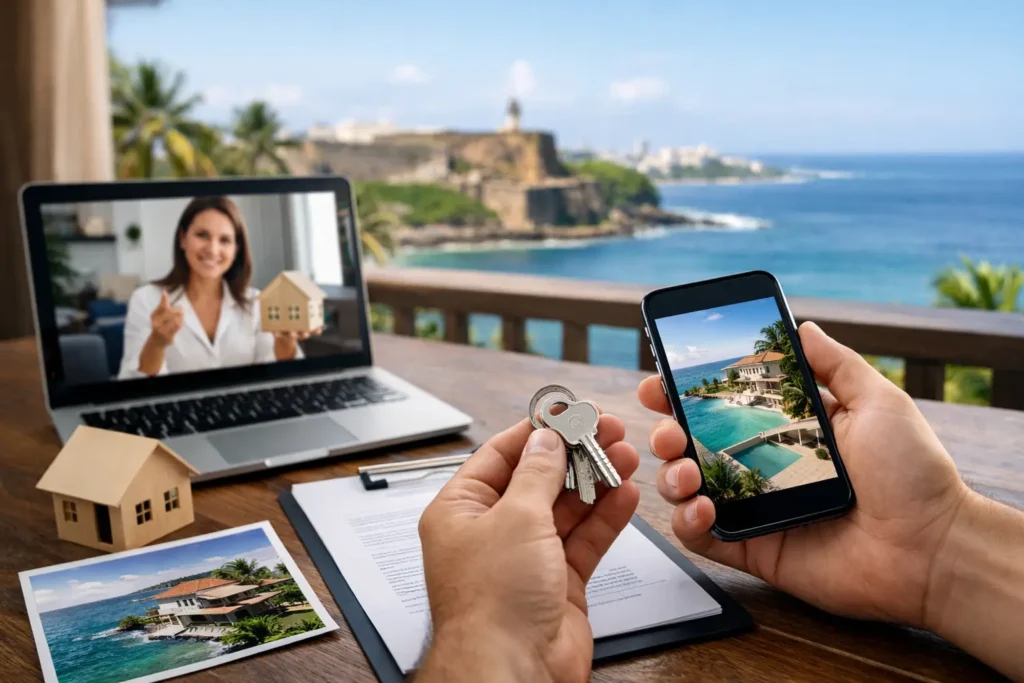
A polished listing video can show you the ocean view. It cannot tell you whether the street floods after a hard rain, whether the generator is included, or whether the HOA has a major assessment pending. Buying homes remotely in Puerto Rico can be an efficient way to relocate, purchase a second home, or secure an investment property, but it requires a disciplined process and a local team willing to verify what a screen cannot.
For off-island buyers, the goal is not simply to see more properties online. It is to make well-supported decisions quickly, protect your deposit, and reach closing with no surprises waiting on the other side of the flight.
Buying Homes Remotely Starts With Local Representation
Remote buyers need more than someone to open doors and send listing links. They need a local advocate who understands the market, communicates clearly, and is prepared to ask the questions that matter before you commit.
Puerto Rico is not one uniform market. A condo in Condado, a coastal home in Dorado, a family property in Guaynabo, and a vacation-oriented residence in Río Grande can have very different ownership costs, insurance considerations, rental rules, utility setups, and buyer demand. Even neighboring communities may differ materially in HOA requirements, access control, road conditions, and flood exposure.
Your agent should first narrow the search around your actual use case. Are you relocating full time, visiting seasonally, purchasing for long-term rental income, or evaluating a short-term rental where permitted? The answer affects location, property type, financing, maintenance planning, and the level of risk you may be comfortable taking on.
A clear buyer brief prevents the remote search from becoming a collection of attractive listings that do not fit your goals. Establish your price range, preferred areas, desired property condition, minimum bedroom count, monthly carrying-cost ceiling, and non-negotiables before serious touring begins.
Build Your Remote Buying Team Before You Make an Offer
A strong purchase is managed by professionals with defined responsibilities. Your real estate agent coordinates the search and negotiation, but a remote transaction also benefits from an experienced Puerto Rico real estate attorney, lender or mortgage broker when financing is involved, home inspector, and insurance professional.
This team matters because each party sees a different part of the transaction. Your attorney reviews title-related documentation and closing documents. Your inspector evaluates visible property conditions and systems. Your lender confirms what you can borrow and the documentation needed to close. Your insurance professional helps you understand insurability, coverage options, and potential costs before you are fully committed.
If you are paying cash, do not assume the process is automatically simple. Cash can make an offer more competitive, but it does not eliminate the need for property, title, tax, HOA, and condition review. In fact, the speed of a cash purchase makes early diligence even more valuable.
For financed buyers, obtain a meaningful preapproval before targeting properties. Ask your lender how they handle loans for a primary residence versus a second home or investment property in Puerto Rico. Loan programs, reserve requirements, insurance requirements, and documentation can vary based on occupancy and property type.
Make Video Tours Work Harder for You
A video call is most useful when it is planned like an inspection preview, not treated like a virtual open house. Ask your agent to walk the exterior first, including the approach to the home, parking, neighboring structures, drainage areas, balconies, roofs visible from the ground, and any shared amenities.
Inside, request a steady, room-by-room walkthrough in natural light where possible. Have the agent open closets, cabinets, electrical panels when appropriate, windows, and sliding doors. Ask to see air-conditioning units, water heaters, laundry areas, storage spaces, and signs of moisture around ceilings, baseboards, bathrooms, and exterior-facing walls.
Photos and edited video are designed to present a property well. That is their job. Your live tour should instead help you understand scale, wear, noise, privacy, layout, and the details that rarely appear in listing media.
Questions Worth Asking During a Remote Tour
Ask how old major systems are, what furnishings or appliances are included, whether the property has a cistern or backup water storage, and how power interruptions are handled. Depending on the property, you may also want clarity on solar equipment, batteries, generators, propane, septic systems, wells, shared roads, and security features.
For condos and gated communities, ask about monthly HOA dues, special assessments, rental restrictions, pet rules, parking assignments, reserve funding, and what services the association provides. A lower purchase price does not always mean lower ownership costs.
Due Diligence Is Where Remote Buyers Protect Themselves
The purchase contract should give you a defined period to conduct due diligence. The exact terms depend on the property and negotiation, but buyers should understand what they are approving, what deadlines apply, and what happens to their deposit under different scenarios.
Start with a professional inspection. A qualified inspector can identify visible concerns with the roof, electrical systems, plumbing, air conditioning, appliances, structure, moisture, and other accessible components. No inspection eliminates every risk, especially in an older or coastal property, but it provides essential information for your decision and negotiations.
Puerto Rico-specific documentation also deserves attention. Review property tax information, including CRIM records where applicable, and confirm whether any balances or exemptions require clarification. Request HOA documents and financial information for condominium or community properties. Verify permits, additions, and improvements when relevant, particularly if the home has been expanded or includes a pool, terrace, guest quarters, or solar installation.
Title review should be handled with your attorney and closing professionals. The Property Registry can be part of that review, but buyers should not rely on a casual statement that a property is “clear.” Ask your team to explain the ownership record, outstanding liens if any, recorded restrictions, easements, and the steps required to transfer ownership properly.
Do Not Skip Insurance and Location Review
Insurance should be considered early, not as a task for the final week before closing. Coastal exposure, flood risk, roof condition, construction type, and the age of systems can all affect availability and premiums. If the property is in or near a flood-prone area, evaluate flood insurance needs and understand that a lender’s requirements may not be the only reason to seek coverage.
Location review is equally practical. A local agent can evaluate access roads, traffic patterns, nearby construction, beach access, nearby commercial activity, and the general feel of a neighborhood. This is where strong on-the-ground guidance has real value. A map pin cannot tell you how a community functions day to day.
Write an Offer That Matches Your Leverage
A remote offer should be competitive without giving away protections you may need. Price matters, but sellers also respond to proof of funds or preapproval, earnest money structure, financing terms, inspection and diligence periods, desired closing date, and the buyer’s ability to communicate and perform.
In multiple-offer situations, a clean offer with realistic timelines can stand out. That does not mean waiving every contingency blindly. It means understanding which terms will strengthen your position and which protections are essential for the property you are buying.
Your agent should explain the trade-offs before you sign. For example, a shorter inspection window can appeal to a seller, but only if your inspector and attorney can complete their work on time. A fast closing may be attractive, but it must align with lender underwriting, insurance binding, and document coordination.
Once under contract, responsiveness becomes a competitive advantage. Remote buyers should be ready to review documents, sign electronically where permitted, send funds through verified channels, and make decisions within agreed deadlines. Never rely on emailed wire instructions alone. Confirm wiring details verbally using a trusted phone number for the closing professional before sending money.
Plan a Visit When It Adds the Most Value
Some buyers can close remotely with the right legal and transaction structure. Others prefer to travel for inspections, a final walkthrough, or closing. The right choice depends on your comfort level, the complexity of the property, and advice from your attorney and agent.
If you can make one trip, schedule it after your offer is accepted and before your diligence period expires. That timing allows you to see the property in person, attend or follow up on the inspection, explore the surrounding area, and make an informed go-forward decision.
A final walkthrough should confirm that the property remains in agreed condition, negotiated repairs have been addressed where applicable, and included items are present. It is not a substitute for inspection, but it is an important final check before closing.
The best remote purchase is not built on blind trust or endless video calls. It is built on a clear plan, documented verification, and professionals who stay ahead of the details. Homes of Puerto Rico helps off-island buyers move from first search to closing with the local market knowledge and responsive coordination a high-stakes purchase deserves.