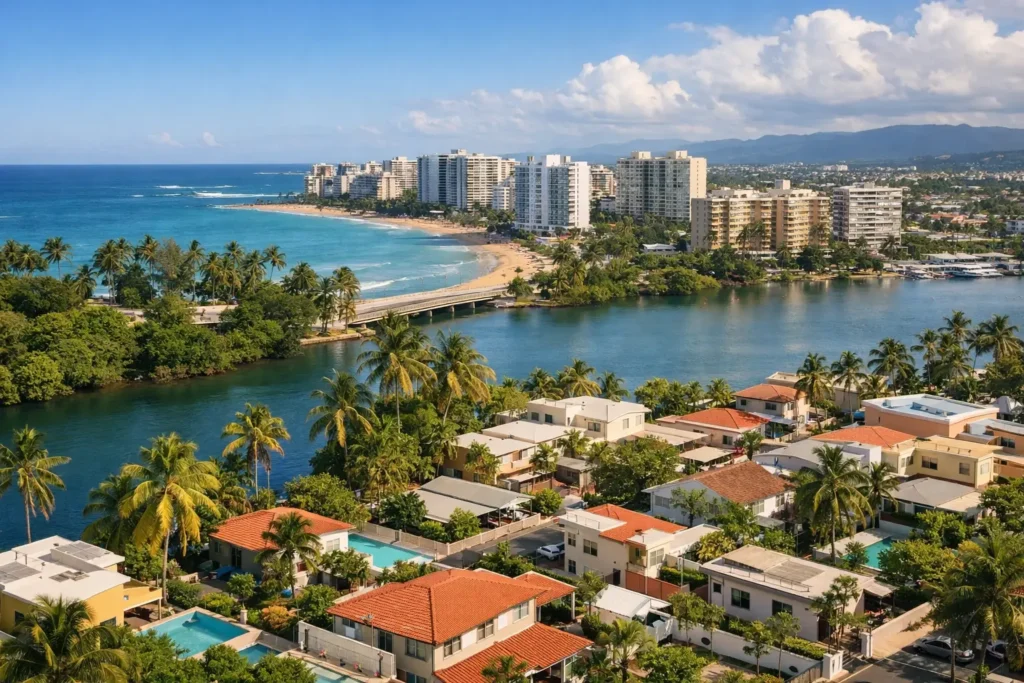
If Carolina is on your shortlist, the first thing to know is that one zip code here can mean a beachfront condo, a gated suburban street, or a more budget-conscious inland neighborhood with easier access to daily essentials. That range is exactly why a strong Carolina Puerto Rico neighborhood guide matters. Buyers who look only at price per square foot usually miss the bigger question – what kind of day-to-day life does each area actually support?
Carolina sits just east of San Juan and covers more ground, more housing variety, and more lifestyle contrast than many buyers expect. For some people, the draw is obvious: beach access, airport proximity, and strong rental appeal. For others, Carolina works because it offers alternatives to the tighter, pricier pockets of metro San Juan while still keeping you close to major employment centers, private schools, shopping, and highways.
The right neighborhood depends less on what looks good online and more on how you plan to live. A frequent traveler may value being 10 minutes from Luis Muñoz Marín International Airport. A family may care more about street feel, parking, and whether the house has room to grow into. An investor may be focused on rental demand, HOA rules, and how seasonal traffic affects guest experience. Carolina can work for all three – but not in the same places.
Carolina Puerto Rico neighborhood guide for buyers
A smart way to read Carolina is to divide it into lifestyle zones rather than treat it as one uniform market. Coastal Carolina gives you the most visible, tourism-adjacent inventory. Inland Carolina often delivers more traditional residential value. Some communities skew toward condo living and short-term-rental interest, while others are more owner-occupied and routine-driven.
That distinction matters because pricing alone can be misleading. A condo near the beach may cost more per square foot but offer stronger rental demand and walkability. A larger inland home may provide better long-term livability for a family, even if it lacks the immediate appeal of ocean views. Neither is automatically the better buy. It depends on your goals, timeline, and tolerance for maintenance, traffic, and HOA structure.
Isla Verde
Isla Verde is Carolina’s best-known coastal submarket, and for good reason. It offers direct beach access, high-rise condos, hotel-adjacent living, and some of the strongest visibility for buyers who want a vacation-oriented or high-demand rental location. If your idea of convenience includes restaurants downstairs, quick airport access, and being close to the action, Isla Verde usually rises to the top.
The trade-off is that you are paying for location, not just for the unit itself. Monthly HOA fees can be significant, parking can be limited, and buildings vary widely in age, reserve health, and overall upkeep. For investors, it is essential to confirm building rules before making assumptions about short-term or mid-term rental use. For primary residents, the real question is whether you enjoy energy and movement year-round, not just during a weekend stay.
Vistamar and nearby residential pockets
Vistamar often attracts buyers who want a residential setting close to the coast and airport without living in the middle of the tourist corridor. Depending on the section and property type, you may find more privacy, larger homes, and a stronger neighborhood feel than in the condo-heavy beachfront zones. This can be a good fit for professionals, relocating families, and buyers who want access without constant exposure to visitor traffic.
What makes Vistamar appealing is balance. You still benefit from metro connectivity, but your home life may feel more grounded and less transient. Inventory here can move quickly when well-priced because it appeals to both end users and buyers looking for stable long-term value in a strategic location.
Country Club
Country Club is one of the more practical names that comes up in any serious Carolina search. It tends to attract buyers looking for a wider range of price points and housing formats, including single-family homes, townhomes, and condos. Access to major roads, retail, schools, and daily services supports strong local demand.
This is not a one-note luxury market, and that is part of its strength. Buyers who prioritize function over flash often find better alignment here. The key is micro-location. Some sections feel more established and residential, while others sit closer to commercial corridors and heavier traffic. A property that looks similar on paper can feel very different once you drive the area at school pickup time or evening rush hour.
Villa Carolina and established family-oriented areas
Villa Carolina and similar established communities appeal to buyers who want neighborhood consistency, more traditional residential patterns, and homes intended for full-time living. These are often the places where buyers focus less on amenities and more on layout, lot size, parking, and long-term practicality.
For local families or anyone relocating within Puerto Rico, these neighborhoods can offer a more familiar ownership experience. You are less likely to be evaluating hotel-style services or tourism spillover and more likely to be comparing road access, renovation potential, and whether the block feels well-kept. Value here tends to come from usability, not hype.
Tourist-adjacent versus local residential areas
One of the biggest mistakes buyers make in Carolina is assuming that being near the beach is always better. Beach proximity can support appreciation and rental demand, but it can also bring older buildings, insurance considerations, stricter condo governance, and a busier environment. For some buyers that is exactly the point. For others, it becomes a mismatch after the novelty wears off.
Local residential areas farther inland may offer more square footage, easier parking, and a stronger sense of neighborhood continuity. If your priority is a stable home base rather than a lifestyle property, those fundamentals can matter more than ocean access. This is where a clear buying strategy protects you from chasing the wrong kind of inventory.
How to compare Carolina neighborhoods the right way
The most effective Carolina Puerto Rico neighborhood guide is not built around broad labels like good or bad. It is built around fit. Start with commute pattern, property type, and intended use. A buyer working in Hato Rey, traveling often, and considering future rental flexibility should evaluate Carolina differently than a retiree seeking low-maintenance beachfront living or a family wanting room for two cars and outdoor space.
Street-level variation matters a lot in Carolina. Two homes may be minutes apart and still differ in flood exposure, traffic noise, walkability, and resale appeal. That is why map searches are only the starting point. You need to understand building condition, community rules, service access, and how the area functions outside listing photos.
If you are buying from the mainland or abroad, this becomes even more important. Carolina is easy to underestimate because it appears straightforward from a distance – close to San Juan, close to the airport, close to the beach. But buying intelligently here means getting specific. Which building? Which section? What are the monthly carrying costs? Is the property set up for your intended use, or will restrictions and repairs change the math?
For sellers, neighborhood positioning matters just as much. A property in Carolina does not sell on city name alone. It sells on how clearly the listing communicates the lifestyle and the use case. A beach condo should be marketed differently than a family home in an established inland community. The strongest results come from matching the property to the right buyer story, then presenting it with enough precision to stand out in a crowded digital market.
That is especially true in Carolina, where buyers often compare properties across San Juan, Condado, Isla Verde, and nearby eastern towns before making a move. Homes of Puerto Rico approaches that kind of search with market context, not guesswork, because the best decisions happen when buyers understand what they are gaining and what they are giving up in each neighborhood.
A useful final filter is this: ask whether you are buying Carolina for access, lifestyle, or value. Access points you toward areas with airport and highway convenience. Lifestyle pushes you closer to the beach and amenity-rich zones. Value usually leads inland, where livability per dollar can be stronger. Once that priority is clear, the right neighborhood tends to become much easier to identify.
Carolina rewards buyers who stay focused. Not every attractive listing is the right fit, and not every quieter neighborhood is a compromise. If you match the area to the way you actually live, Carolina can deliver one of the most versatile residential options in the metro market.