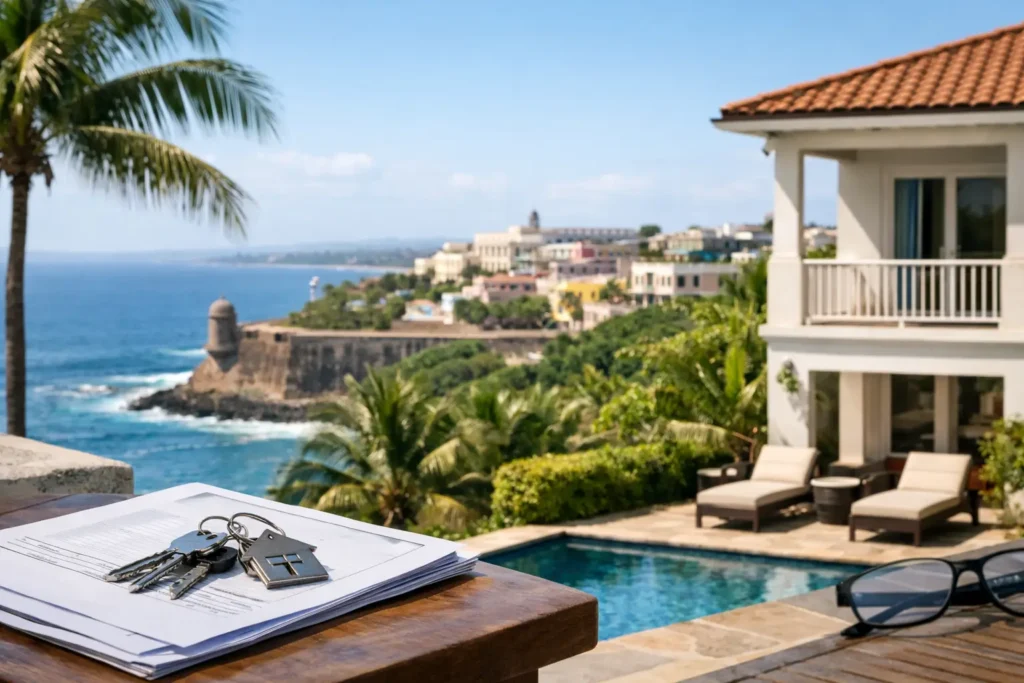
If your Puerto Rico move still lives in a spreadsheet, the housing decision is where it becomes real. The right home can make a relocation feel smooth from week one. The wrong choice can lock you into a long commute, surprise repair costs, or a neighborhood that does not fit how you actually live. This moving to Puerto Rico housing guide is built to help you make that decision with more clarity and fewer expensive assumptions.
Puerto Rico is not one housing market. San Juan, Dorado, Guaynabo, Carolina, Río Grande, Humacao, Luquillo, and Caguas each attract different buyers, budgets, and lifestyles. A condo near the metro core solves a very different problem than a single-family home in a gated suburban community or a beach-area property with short-term rental potential. Before looking at listings, it helps to get honest about your priorities: daily routine, school access, commute, storm-readiness, maintenance tolerance, and whether you are buying for lifestyle, long-term residence, or investment performance.
Moving to Puerto Rico housing guide: start with location
Most buyers begin with the wrong question. They ask, “What can I get for my budget?” The better first question is, “Where do I need to be for my life to work well?”
San Juan appeals to buyers who want city access, established neighborhoods, private schools, dining, hospitals, and a more urban rhythm. Inventory ranges from luxury condos to older apartments and homes with character, but pricing and parking realities vary block by block. If walkability matters, one building can feel completely different from the next.
Guaynabo tends to attract professionals and families who want a suburban feel with strong services and easy access to the metro area. You will often find gated communities, larger homes, and a neighborhood structure that feels familiar to many mainland buyers. The trade-off is that inventory in the most in-demand pockets can move quickly.
Dorado sits in a different lane. Buyers looking there are often paying for lifestyle, privacy, amenities, and access to high-end communities. It can be a strong fit if your budget supports it and your goal is a resort-adjacent or luxury residential environment. It is less ideal if you want maximum square footage for the lowest monthly cost.
Carolina can make sense for buyers who want convenience near the airport, beach access in select areas, and a range of housing types. Río Grande and Luquillo appeal to buyers who want greener surroundings, golf or resort proximity, and access to the east side’s outdoor lifestyle. Humacao often attracts buyers interested in planned communities and coastal living. Caguas is worth a serious look if you want more inland value, space, and a different pace while staying connected to major routes.
Buying vs. renting before you commit
For some relocations, renting first is the smarter move. That is especially true if you are still learning commute patterns, school options, or which side of the island best fits your routine. A one-year lease can save you from buying in the wrong market too fast.
Buying makes sense when you are confident about your timeline, your budget is stable, and you understand the neighborhood well enough to commit. In higher-demand areas, buying can also protect you from rising rents and limited quality inventory. But ownership in Puerto Rico comes with local realities – HOA rules, flood exposure, insurance costs, and maintenance planning matter more than many off-island buyers expect.
There is no universal right answer here. If your move is tied to work, family, or school and you already know where you want to be, buying early may be efficient. If your move is more exploratory, renting first can be a disciplined decision, not a hesitant one.
What housing stock looks like in Puerto Rico
The island offers more variety than many buyers assume. Condos are common in metro and coastal markets, and they can simplify maintenance while offering amenities and security. They also come with HOA fees, reserve health questions, pet rules, and financing considerations that need review before you write an offer.
Single-family homes vary widely in age, construction style, lot size, and condition. A house may look attractively priced online but need upgrades to roofing, windows, drainage, or electrical systems. In some neighborhoods, two homes with similar square footage can have very different values based on backup water systems, generator setup, parking, and storm protection.
Townhomes and planned community properties often appeal to buyers who want a middle ground – more privacy than a condo, less upkeep than a larger detached home. These can be strong options in family-oriented and amenity-driven areas, but association rules should be reviewed closely.
The numbers are more than the sale price
A disciplined purchase starts with full monthly cost, not just the listing price. Buyers moving from the mainland sometimes underestimate the importance of insurance, utilities, HOA dues, and maintenance reserves. If you are buying near the coast or in a flood-prone zone, those costs can change the math quickly.
Your housing budget should account for mortgage payment if financed, hazard and possibly flood insurance, property taxes, HOA fees if applicable, utilities, maintenance, and move-in improvements. If you are targeting a condo, ask early about special assessments, reserve funding, and any building issues that could affect financing or future resale.
For cash buyers, the same rule applies. Just because you can buy at a certain number does not mean the carrying cost fits your lifestyle. A property that stretches your monthly comfort level tends to stop feeling exciting very fast.
How financing and timing work
Puerto Rico transactions can move efficiently, but only if the preparation is handled correctly. If you are financing, get your lending strategy in place before you fall in love with a property. That means understanding your price ceiling, estimated cash to close, and any condo or insurance conditions that could affect approval.
Cash buyers have speed as an advantage, but that should not replace due diligence. Title review, property condition, zoning or use issues, and association documents still matter. Fast is good. Blind is expensive.
If you are relocating on a deadline, build in margin. The right property may not appear the week you start searching, and some areas have tighter inventory than others. A rushed purchase often leads to compromises you would not accept with another 30 days of planning.
A practical moving to Puerto Rico housing guide for off-island buyers
Off-island buyers face a predictable challenge: online listings do not fully show neighborhood feel, building quality, traffic flow, or the difference between “updated” and actually well-maintained. This is where local guidance becomes critical.
Video tours help, but they should not be your only filter. Ask for context around the block, the building, parking, backup infrastructure, and nearby uses that may affect noise or privacy. A beautiful unit can lose value fast if access is difficult, the HOA is unstable, or the area does not match your intended routine.
If you cannot visit immediately, narrow by lifestyle first, not just price. Do you need quick airport access? A beach lifestyle? Family-oriented neighborhoods? A true primary residence or a lock-and-leave property? That framework helps you avoid wasting time on listings that look good online but make no sense for your move.
Mistakes smart buyers still make
One common mistake is over-prioritizing vacation appeal. Living in Puerto Rico is different from visiting. Ocean views are powerful, but commute friction, parking limitations, or constant maintenance can wear on you if the property is meant to support everyday life.
Another mistake is assuming all neighborhoods trade the same way. They do not. Some areas hold value because of schools, access, and low turnover. Others move more on seasonality, lifestyle demand, or investor interest. If resale matters, buy with the next buyer in mind.
The third mistake is treating condition as a cosmetic issue. In Puerto Rico, practical features matter: water cisterns, generators or hookups, storm shutters, drainage, and general building maintenance. These details affect comfort, insurability, and long-term cost.
What a strong search process looks like
A good housing search is not just about seeing more listings. It is about eliminating the wrong ones faster. Define your must-haves, your trade-offs, and your true monthly ceiling before touring. Then compare properties based on how they perform against your actual life, not just their photos.
That is where a local brokerage with market coverage across key areas can make a real difference. Homes of Puerto Rico helps buyers sort through neighborhood fit, property type, pricing reality, and transaction logistics so the search does not stall at the point where local details start to matter most.
You do not need the perfect property on day one. You need the right decision process. When your search is grounded in location, full cost, local conditions, and honest trade-offs, the move starts feeling less like a gamble and more like a plan worth acting on.