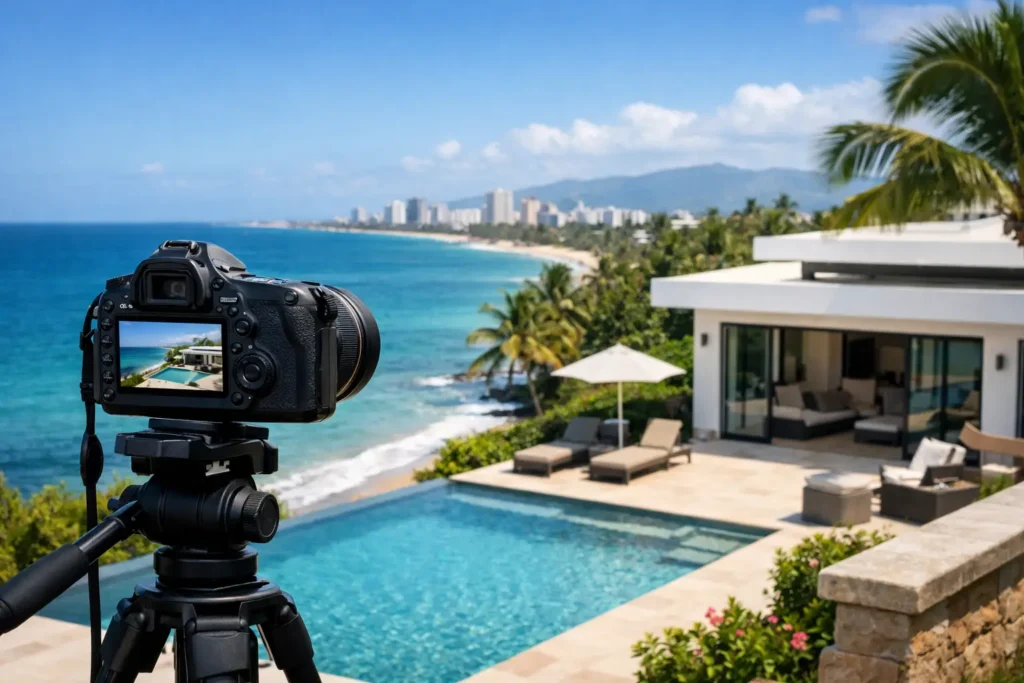
A buyer scrolling listings in San Juan, Dorado, or Río Grande makes a decision faster than most sellers realize. Before they read the square footage, HOA details, or tax notes, they react to the photos. That is why professional real estate photography Puerto Rico is not a luxury add-on. It is a pricing and marketing tool that directly affects click-through rate, showing volume, buyer confidence, and ultimately the terms you bring to the table.
In Puerto Rico, presentation matters even more because many buyers are not just comparing homes. They are comparing lifestyle, neighborhood access, views, light, and condition from a distance. Some are relocating from the mainland. Some are investing from off-island. Some are booking a trip specifically to tour the few properties that looked credible online. If your visuals fail at that first step, the property can lose momentum before a showing is ever scheduled.
Why professional real estate photography in Puerto Rico carries more weight
A home in Puerto Rico often sells more than bedrooms and bathrooms. It sells natural light, outdoor living, ocean or mountain context, architectural character, and proximity to key areas. A condo in Condado, a gated home in Dorado, or an investment unit near Humacao may attract very different buyers, but they all rely on the same first filter – the quality of the listing presentation.
Poor photography creates doubt. Buyers start asking whether the home is dark, small, outdated, or overpriced. Even when the property itself is strong, weak images can make it look harder to finance, harder to insure, or harder to justify versus competing inventory. That hesitation usually shows up as fewer inquiries, slower showings, and more pressure on price.
Strong photography does the opposite. It gives buyers a sense of order and clarity. Rooms look proportional. Finishes read correctly. Window light feels natural instead of blown out. Exterior shots explain curb appeal and approach. When images are done right, they do not oversell. They reduce friction.
What buyers expect from professional real estate photography Puerto Rico listings
Today’s buyer expects more than a few wide-angle photos shot on a phone. They expect a complete visual package that helps them understand the property before they commit time to a tour.
That usually starts with clean, properly exposed interior photography. Every room should have a clear purpose. The framing should show flow, not just corners. Kitchens and baths need to look accurate, because buyers pay close attention to finishes there. Bedrooms should feel usable, not cramped. Living areas should communicate layout and livability.
Exterior images matter just as much. In Puerto Rico, outdoor spaces often drive emotional response and value perception. Terraces, balconies, pools, yards, and covered entertaining areas need intentional coverage. A property with a view should not leave buyers guessing where the sightline actually is.
Drone photography and videography can be especially valuable here, but only when used strategically. Aerial visuals work well for estates, coastal homes, gated communities, larger lots, and properties where location context is a major selling point. They are less useful when they become filler. The goal is to clarify the property’s setting, not just add flashy footage.
The difference between photos that look nice and photos that perform
Not every polished image is effective in a real estate campaign. The standard is not whether the photos look artistic. The standard is whether they help the right buyer act.
Performance-focused photography starts with preparation. The home has to be staged for the camera, not just generally cleaned. Countertops should be simplified. Cords, mismatched decor, bulky trash bins, pet items, and visual clutter should be removed. If a room has an awkward setup, furniture may need to be shifted to improve the line of sight and show scale.
Then comes timing. Puerto Rico light changes fast, and weather can work for you or against you. Harsh midday light can flatten exteriors and create blown highlights. Late afternoon can add warmth, but only if the home’s orientation supports it. A professional team plans around that instead of simply arriving whenever the seller is available.
Editing also matters, but there is a line. Buyers should see a home at its best, not in a misleading version of reality. Color correction, window balancing, sky replacement in moderation, and perspective correction are standard. Changing the condition of the property is not. Smart marketing builds confidence. It does not create disappointment at the showing.
Puerto Rico-specific factors sellers should not ignore
Real estate photography on the island has a few practical variables that sellers and landlords often underestimate.
Humidity, glare, tropical landscaping, and strong exterior light can create technical challenges that require experience. White walls and tile floors can reflect light aggressively. Oceanfront homes may have spectacular views but difficult contrast. Condos can be tricky because common elements, parking access, and surrounding buildings influence value and need to be represented clearly.
There is also the issue of audience. A local move-up buyer may understand the appeal of a specific street or school pattern immediately. An off-island buyer often needs more context. That means the visuals should help explain not just the house, but the environment around it. Community entrance shots, amenity visuals, and aerial positioning can make a major difference when the person making the inquiry is not already familiar with the area.
For rental and investment properties, speed matters even more. Vacancy is expensive. If a unit photographs poorly, it may sit longer, attract weaker inquiries, or force a price adjustment that costs more than the photo session ever would have.
When video and drone work actually make sense
Some listings need more than still photography. Others do not.
Video is powerful when the property has flow, lifestyle appeal, or design features that make more sense in motion. Open-concept layouts, indoor-outdoor transitions, luxury finishes, and resort-style amenities often benefit from video because it helps buyers understand how the home feels.
Drone footage is worth it when the lot, neighborhood, view, or proximity to beaches, golf, marinas, or main roads is part of the value story. It is especially effective in Dorado, Río Grande, and coastal or gated communities where location premium is not obvious from interior photos alone.
But there is a trade-off. More assets do not automatically mean better marketing. If the core photography is weak, adding drone clips will not fix the campaign. The sequence should be right: strong stills first, then video and aerial support where they add context and help qualify buyers.
What sellers should ask before hiring a real estate photographer
The right question is not just, “How much does it cost?” It is, “Will this help my property compete?”
Ask whether the photographer regularly shoots occupied homes, luxury properties, condos, and investment units similar to yours. Ask how they handle weather delays, editing timelines, and image licensing. If drone work is involved, confirm FAA certification and local compliance. Ask how many final images are delivered and whether the shoot is tailored to the property type.
Most importantly, ask who is directing the visual strategy. Great listing media works best when it is integrated into pricing, launch timing, ad distribution, social media, and showing coordination. Photography should not be treated as a disconnected vendor task. It should support the broader sales plan.
That is where a brokerage with a true marketing engine has an advantage. At Homes of Puerto Rico, premium visual assets are part of a larger strategy built to generate demand, attract serious buyers, and support stronger negotiations, not just make a listing look polished for a few days online.
For buyers, good photography is a filter, not just a sales tool
Buyers sometimes assume professional visuals exist only to help sellers. In practice, they help buyers make better decisions faster.
Clear photography lets you eliminate homes that do not fit your needs before wasting time on a tour. It also helps you identify properties worth acting on quickly, especially in competitive pockets where hesitation can cost you options. If you are buying from the mainland or abroad, quality visuals become even more important because they help bridge the distance between online research and in-person decision-making.
Of course, photos are never the full story. They cannot replace inspection, title review, neighborhood analysis, financing review, or professional representation. But they are the first checkpoint in a process where speed and confidence matter.
The strongest listings do not rely on hype. They present the property clearly, support the asking price, and attract the kind of buyer who is ready to move. In Puerto Rico’s residential market, that starts with images that are accurate, strategic, and built to perform. If you are selling, treat photography like part of the negotiation before the negotiation. If you are buying, pay attention to how a property is presented, because serious marketing usually signals serious representation.