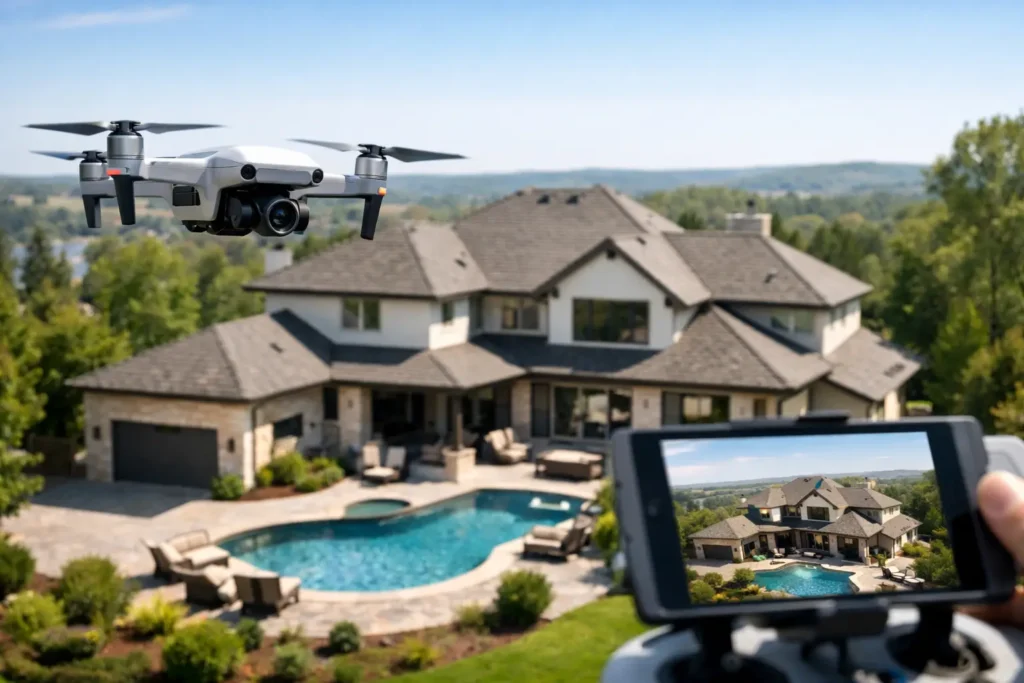
A buyer scrolling listings from Miami, New York, or Madrid can decide in seconds whether a Puerto Rico property feels worth the flight, the call, or the showing. That is where real estate drone video for home listings stops being a nice extra and starts acting like a serious marketing tool. For sellers, it expands the story beyond square footage. For buyers, it provides context that ground-level photos simply cannot.
In a market like Puerto Rico, where lifestyle, topography, privacy, and proximity matter as much as the house itself, video from the air can change how a property is understood. A home in Dorado is not just a kitchen, a pool, and three bedrooms. It may also be a short drive to the beach, inside a gated community, near golf, or positioned for sunset views. A residence in Guaynabo may offer access, elevation, and neighborhood layout that never reads clearly in still photography. Drone footage shows those advantages fast.
Why real estate drone video for home listings works
Traditional listing photos do one job well. They document rooms, finishes, and condition. But they flatten the surrounding experience. Buyers do not only purchase walls and flooring. They purchase setting, approach, privacy, orientation, and convenience.
Drone video adds motion, scale, and geography. It can show how a home sits on its lot, what surrounds it, how open the views are, and how the property connects to the neighborhood. For coastal homes, that may mean revealing water access or distance to the shoreline. For suburban properties, it may mean showing the quiet of a cul-de-sac or the depth of a backyard. For rural or hillside homes, it may mean capturing elevation and landscape in a way that makes the value immediately obvious.
That matters even more for off-island and international buyers. Many are making an early decision without physically standing on site. They need confidence before they commit to a trip, a virtual consultation, or an offer strategy. A strong drone video reduces uncertainty. It answers questions before the buyer has to ask them.
The real value is context, not just cinematic footage
There is a difference between flashy footage and useful footage. A lot of agents understand that drone video looks impressive. Fewer understand what it should actually communicate.
The best real estate drone video for home listings is not trying to look like a travel commercial. It is trying to help the right buyer say, “This property makes sense for me.” That means every aerial angle should support a selling point.
If the property is in a gated community, the video should establish arrival and access. If the lot is oversized, the footage should make the lot line and usable outdoor space easy to read. If the home has a view, the shots should show what the owner enjoys from the property and how protected that view feels. If the value is location, the footage should clarify proximity without creating confusion about distance.
This is where strategy matters. A drone operator can fly a camera. A marketing-driven brokerage knows how to use aerial footage to position the property correctly.
Which homes benefit most from drone video
Not every listing needs the same level of production, and that is where honest guidance matters. Drone footage is especially effective when the property has outdoor features, unusual positioning, strong surroundings, or location-based appeal.
Luxury homes are the obvious fit because buyers at that price point expect premium presentation. But mid-range homes can benefit too, especially in markets where lot layout, neighborhood feel, or nearby amenities influence demand. A family home with a large yard, terrace, pool, or corner lot can show far better from the air than from the driveway. Rental and investment properties can also benefit when the video helps investors understand access, density, or surrounding development.
There are, however, cases where drone footage adds less value. A small condo with limited exterior distinction may not need an extended aerial sequence unless the building location, amenities, or nearby attractions are central to the sale. In those situations, the footage should be brief and purposeful. Good marketing is not about adding every possible asset. It is about using the right assets to support price and buyer interest.
What buyers actually notice in aerial listing videos
Buyers notice more than most sellers expect. They notice roof condition, neighboring structures, road noise, lot boundaries, slope, traffic patterns, and whether the home feels tucked away or exposed. That is why quality and shot selection matter.
Well-produced drone footage builds trust because it presents the property clearly. Poorly planned footage can do the opposite. If the video is shaky, overly edited, or vague about the home’s surroundings, buyers may assume the presentation is hiding something. In real estate, confidence matters. A listing should feel polished, but it should also feel credible.
That is particularly important in Puerto Rico, where buyers may be evaluating storm exposure, elevation, distance from main roads, or neighborhood density from afar. Aerial footage can answer those concerns directly if it is handled with discipline.
How drone video supports pricing and market positioning
Presentation does not change the fundamentals of price, but it does shape how quickly buyers understand value. That is a major distinction.
If a seller is asking a premium price, the marketing has to justify it immediately. Drone video helps establish why the home is worth a closer look. It can visually support features that are easy to undervalue in text, such as privacy, usable land, water orientation, gated access, or relationship to major lifestyle amenities.
This does not mean drone footage fixes overpricing. It does not. If the home is priced above the market, better visuals may generate clicks but not serious offers. But when pricing is disciplined and positioning is right, video can accelerate attention and improve the quality of inquiries.
That is why strong listing strategy combines valuation, staging guidance, photography, video, and distribution. One asset alone rarely carries the result. The pieces work together.
Real estate drone video for home listings needs compliance and judgment
Drone work in real estate should never be treated casually. Safety, legality, and planning matter. FAA-compliant operation is part of professional listing marketing, not an optional detail.
That matters for two reasons. First, it protects the seller, the property, and the public. Second, it reflects the standard of the listing itself. A brokerage that cuts corners on media often cuts corners elsewhere. Sellers should expect a controlled process, clear communication, and footage captured with a purpose.
Judgment is just as important as licensing. Some neighborhoods have flight limitations, weather issues, or privacy sensitivities that affect what should be filmed and when. Puerto Rico also presents changing light, wind, and coastal conditions that can make the difference between average footage and premium footage. Experienced execution is not only about getting the drone in the air. It is about knowing when the property will present best and what angles support the sale.
The strongest drone videos are part of a larger marketing engine
Aerial footage has the most value when it is built to travel. That means it should work not only on the MLS, but also across social media, short-form video platforms, email marketing, and agent-to-agent promotion. A property video that lives in one place is underused. A property video that is cut, distributed, and targeted properly can create far more exposure than the listing platform alone.
This is one reason modern sellers are paying close attention to who markets the property, not just who puts the sign in the yard. Exposure is no longer local by default. A buyer in another state or another country can discover a Puerto Rico listing through video long before ever searching a portal directly.
For a brokerage built around both transaction management and digital reach, drone content becomes more than a visual upgrade. It becomes part of demand generation. That is especially relevant in markets like San Juan, Dorado, Río Grande, Humacao, and Luquillo, where location-driven lifestyle appeal can bring in buyers from well beyond the immediate area. Homes of Puerto Rico approaches media with that wider audience in mind.
When sellers should ask for drone footage
Sellers should ask early, before the listing goes live. The decision affects prep, scheduling, and how the entire launch is built. If drone footage will be part of the campaign, the property should be ready both inside and outside. Landscaping, driveway condition, pool presentation, rooftop appearance, and neighboring distractions all become more visible from the air.
It is also smart to ask how the footage will be used. Will it be a short teaser, a full listing video, or part of a broader social campaign? Will the story focus on land, views, location, or overall luxury presentation? Those choices should match the likely buyer, not just the seller’s personal preferences.
The right question is not, “Can you do drone video?” The better question is, “How will drone video help this specific property attract the right buyer and support the asking price?”
That is the standard sellers should expect. Strong marketing is not about adding noise. It is about making the property easier to understand, easier to trust, and harder to ignore. When that happens, a listing does more than look better on screen. It enters the market with real momentum.