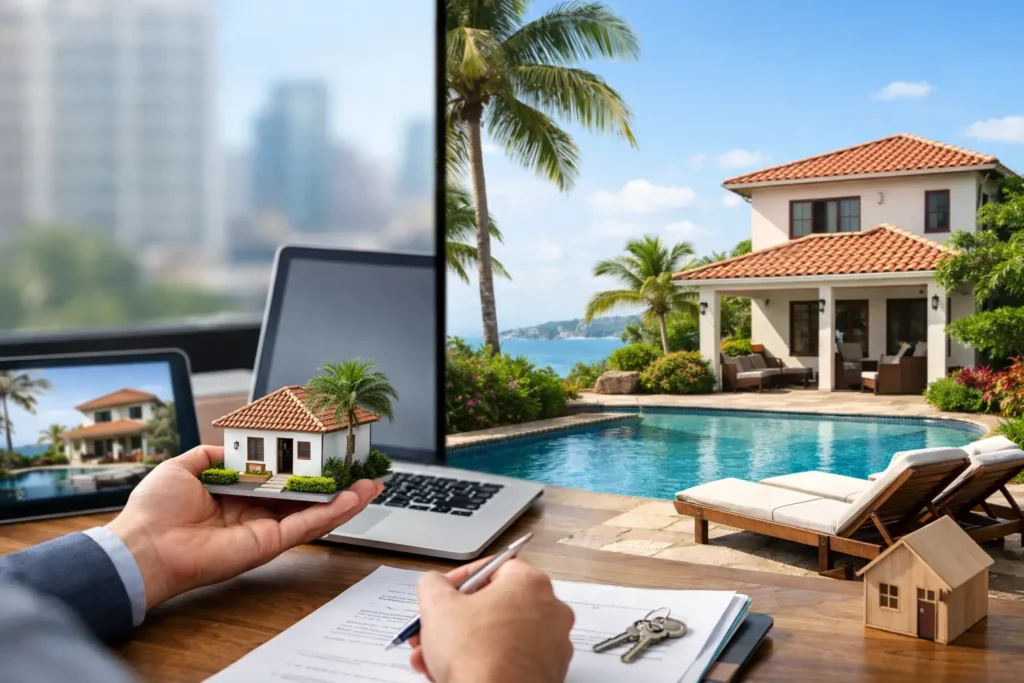
If you’re selling Puerto Rico home from mainland, the biggest risk usually is not distance itself. It’s making local pricing, showing, repair, and closing decisions too late because the process is being managed remotely. A property in San Juan, Dorado, Río Grande, or Humacao can absolutely be sold successfully from the mainland, but it requires local control, sharp communication, and marketing that reaches buyers well beyond whoever happens to drive by.
This is not the kind of sale you want to run casually. Remote sellers often face a different set of pressures than local owners. Sometimes the home is inherited. Sometimes it was a second home that no longer fits the plan. Sometimes the owner already relocated for work and needs the property sold without repeated flights back to the island. In each case, the strategy should be built around one question: how do you protect value while reducing friction from a distance?
What selling a Puerto Rico home from the mainland really requires
A remote sale works best when three things are handled well from day one: pricing, property readiness, and transaction control. If even one of those is weak, distance tends to amplify the problem.
Pricing is the first issue. Puerto Rico is not one uniform market, and sellers from the mainland sometimes rely on outdated assumptions or broad online estimates that do not reflect neighborhood-level demand. A condo in Condado, a suburban home in Guaynabo, and a resort-area property in Río Grande can each attract very different buyer pools, financing profiles, and days-on-market patterns. Correct pricing is not about choosing a number that sounds strong. It is about positioning the property so it generates serious interest quickly, without signaling weakness through multiple price drops.
Property readiness matters just as much. A home that is technically listed but poorly presented will sit, and sitting hurts leverage. Remote owners need a realistic assessment of condition, deferred maintenance, curb appeal, and what buyers in that specific area expect. Sometimes the right move is a light refresh and professional staging cues. Other times, especially in higher-value segments, premium photography, video, and drone footage create the difference between passive visibility and real demand.
Then there is transaction control. Once showings begin, the sale can move fast. Inspections, repair requests, title coordination, HOA or condo documentation, utilities, tax questions, and closing logistics all need active oversight. This is where many remote sellers feel the stress. The solution is not more noise. It is having a local operator who can make the process move with discipline.
Pricing from afar without guessing
One of the most common mistakes in selling Puerto Rico home from mainland is treating the asking price as a test. Sellers think they can start high, “see what happens,” and adjust later. In reality, the first wave of market attention is usually the strongest. If the property misses that window, buyers start asking what is wrong.
A strong pricing strategy should account for current competition, not just past sales. It should also consider the property’s exact condition, view, location within the neighborhood, monthly carrying costs, and likely buyer type. Cash buyers, conventional buyers, and second-home buyers do not behave the same way, and your pricing should reflect the audience most likely to act.
This is where a performance-driven brokerage brings real value. The goal is not to flatter the seller with an aggressive number. The goal is to create a pricing position that protects equity while driving urgency.
Preparing the home when you are not on the island
Remote preparation is part logistics and part judgment. You do not need to over-improve every property before listing, but you do need to remove obvious friction. Buyers notice small problems quickly, especially when a home is vacant.
Start with the basics: landscaping, cleaning, paint touch-ups, lighting, and any maintenance issues that create concern during a showing. In Puerto Rico, climate exposure also matters. Signs of moisture, exterior wear, or neglected outdoor areas can shape a buyer’s impression before they even discuss price.
If the home has been empty, someone local should walk it before launch and document exactly what needs attention. This prevents the classic remote-seller problem of approving work blindly, spending in the wrong places, or discovering preventable issues only after the home hits the market.
The best results usually come from a focused prep plan, not a massive renovation. Most sellers benefit more from clean presentation and high-quality marketing than from expensive upgrades with uncertain return.
Marketing matters more when the owner is remote
When you are off-island, your marketing has to do more of the heavy lifting. The listing needs to answer buyer questions before they ask them. That means polished visuals, accurate property details, and broad digital exposure that reaches buyers locally, on the mainland, and internationally.
This is especially true in Puerto Rico, where many active buyers are not just coming from the immediate area. Some are relocating. Some are purchasing a second residence. Some are investing. A listing that only gets minimal exposure is leaving demand on the table.
Professional photography is the baseline. Video can dramatically improve engagement, especially for remote buyers trying to understand layout and flow. Drone footage is often valuable for coastal homes, gated communities, larger lots, and properties where proximity to amenities or water is part of the appeal. Strong social media distribution also matters more than many sellers realize. It creates reach beyond the MLS and can put the property in front of qualified buyers who were not actively watching that exact neighborhood that day.
That visibility should not come at the expense of accuracy. Remote sellers need a brokerage that markets aggressively but also manages expectations carefully. Overpromising traffic or price helps no one. Strong execution is what converts attention into offers.
Managing showings, offers, and negotiations from the mainland
You should not need to fly in every time the property needs attention. A well-managed sale creates a reliable local process for access, security, feedback, and follow-up.
For vacant homes, showing coordination should be tight and documented. For occupied properties, communication with tenants or caretakers needs to be clear and consistent. Either way, remote sellers need fast updates, not delayed summaries after the market has already shifted.
When offers come in, speed matters, but so does structure. The best offer is not always the highest number. Financing strength, inspection timelines, contingencies, proof of funds, appraisal exposure, and closing flexibility can change the real value of the deal. This is where experienced negotiation protects sellers. A mainland owner needs more than a messenger forwarding PDFs. You need someone reading the full risk profile of each offer and advising accordingly.
Puerto Rico-specific issues that can affect the sale
Remote sellers are often surprised by how local details shape the transaction. Property tax records, title matters, permits, condo rules, and utility documentation can all become sticking points if they are addressed too late.
If the home was inherited, held in an entity, used as a rental, or improved over time, there may be extra documentation to collect. Condos and planned communities often require resale packages, payment confirmations, or association approvals. Some properties have location-specific issues that buyers and lenders scrutinize more closely than mainland sellers expect.
None of this means the sale is unusually difficult. It means remote sellers should prepare early. The more paperwork and due diligence you handle before listing, the fewer surprises show up once a buyer is under contract.
Choosing the right local partner
If you are selling from the mainland, your agent is not just listing the property. They are effectively your field team. That makes responsiveness, marketing skill, and transaction management non-negotiable.
You want someone who knows the market at street level, communicates clearly, and can manage the details without constant prompting. You also want proof that their marketing reaches beyond basic listing syndication. In a market where off-island and international demand can matter, broad digital reach is a strategic advantage, not a cosmetic extra.
At Homes of Puerto Rico, that combination of local execution and digital-first exposure is exactly what remote sellers need. Strong pricing guidance, premium presentation, and disciplined follow-through can make the difference between a listing that lingers and a sale that moves with confidence.
Selling from afar is absolutely doable, but it rewards preparation and punishes guesswork. If you build the right local strategy early, distance becomes a logistics detail instead of a liability. And that is when you can make decisions calmly, protect your timeline, and sell with far more control than most remote owners expect.