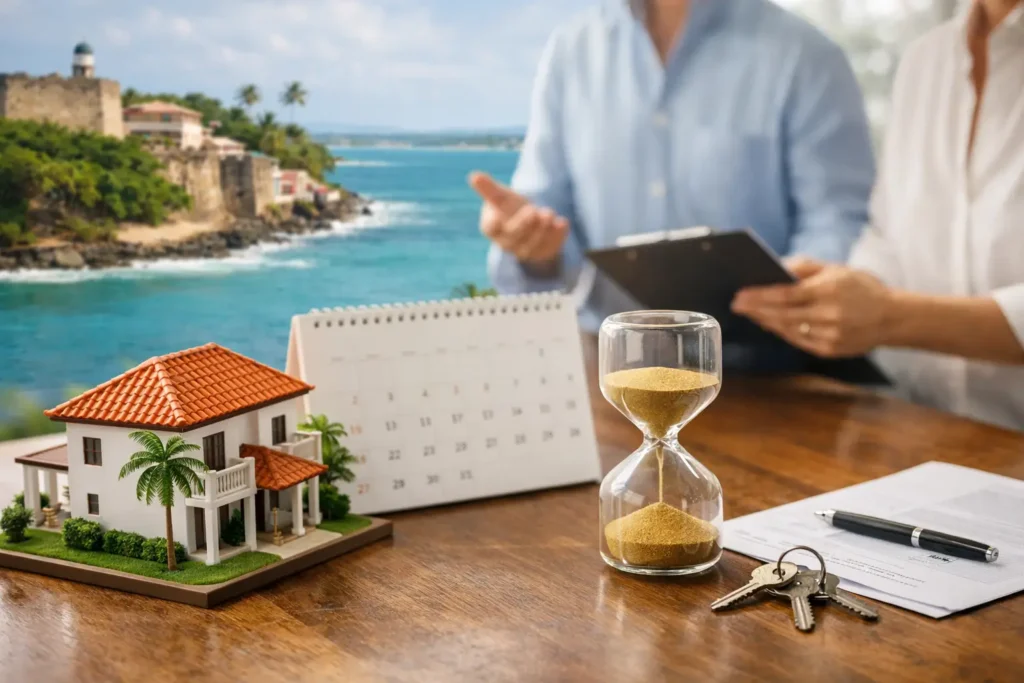
A strong sale rarely begins when the first buyer walks through the door. It begins weeks earlier, when pricing, paperwork, presentation, and access are organized correctly. This Puerto Rico home selling timeline guide shows what typically happens from the decision to sell through closing – and where timing can shift based on your property, buyer profile, and municipality.
For a well-prepared home in a desirable market, the process may move from launch to closing in 30 to 90 days. A luxury property, a home requiring title cleanup, or a sale involving buyer financing can take longer. The goal is not to force a deadline. It is to control the variables that can be controlled before they cost you leverage.
Weeks 1-2: Build the Selling Strategy Before You Go Live
The first two weeks determine whether your listing enters the market with momentum or spends months correcting an avoidable pricing or presentation problem. Start with a detailed property review: condition, improvements, neighborhood competition, likely buyer pool, and the property’s strongest differentiators.
A condominium in San Juan may compete on location, building amenities, parking, views, and monthly maintenance fees. A home in Dorado, Río Grande, or Humacao may draw attention for gated access, outdoor living, golf, beach proximity, backup power, or short-term rental potential where permitted. A family home in Guaynabo, Caguas, or Carolina may be judged more heavily on layout, schools, access, and move-in readiness. The right price is not simply what a nearby property asked. It reflects what comparable homes actually support, how yours presents, and how much competition buyers can choose from today.
At the same time, begin gathering the documents that commonly slow down a Puerto Rico transaction. Your broker and closing team may request the current deed, legal description, evidence of ownership, mortgage payoff information, property tax details, condominium documents if applicable, utility information, and records for significant improvements. The exact requirements depend on the transaction, but starting early gives you time to identify discrepancies rather than discovering them after an offer arrives.
This is also the right moment to decide what should be repaired, refreshed, or left alone. Fresh paint, deep cleaning, landscape cleanup, lighting adjustments, and small deferred-maintenance fixes can improve first impressions quickly. Major renovations are more situational. If a kitchen is dated but functional, pricing and presentation may produce a better return than delaying the sale for a full remodel.
Weeks 2-3: Prepare the Property for Its Best First Impression
Buyers make fast judgments online and even faster judgments at the front door. Preparation should make the home feel clear, cared for, and easy to understand. Remove excess furniture, personal items, and visual clutter so rooms photograph larger and buyers can see the home’s layout.
Professional photography, video, floor-plan details where appropriate, and drone footage for properties with views, land, beachfront access, or a compelling setting are not cosmetic extras. They shape the caliber of inquiry your listing receives. Off-island buyers often decide whether to schedule a viewing, request a video call, or book a flight based on the digital presentation alone.
Access matters just as much. Decide how showings will be handled, who can approve appointments, whether pets need a plan, and how much notice your household needs. Limited showing availability can be necessary, but it can also reduce buyer traffic during the critical launch period. A practical schedule protects your routine without making serious buyers wait unnecessarily.
The Puerto Rico Home Selling Timeline Guide for Listing Week
Once the property is ready, the listing should launch with a complete story, not a placeholder photo and a hopeful price. The first days are when your property is newest to the market and when buyer attention is highest. This is the time for accurate listing details, polished visuals, targeted digital distribution, agent outreach, and responsive follow-up.
For Homes of Puerto Rico, that means pairing traditional brokerage execution with high-impact digital exposure designed to reach both local demand and off-island buyers. Speed matters here. An inquiry that waits until the next day for a response can become a showing at another property.
Weeks 3-6: Showings, Feedback, and Early Market Signals
The first several weeks reveal whether the market agrees with the pricing and positioning. You may receive a strong offer quickly, multiple offers, consistent showings without offers, or very little activity. Each outcome requires a different response.
If qualified buyers are viewing the property but no one is writing, feedback can reveal a condition concern, a layout objection, or a price gap. If there are few showings at all, the issue is often visibility, price, availability, or the listing’s ability to communicate value online. Do not make emotional changes after one quiet weekend. Do pay attention to patterns after enough qualified exposure.
This is where sellers benefit from direct reporting: how many inquiries came in, who toured, what buyers compared the home against, and whether there are repeat objections. The decision may be to hold steady, adjust the presentation, improve access, or reposition the price. A timely correction is usually more effective than letting a listing become stale.
Weeks 4-8: Evaluate Offers Beyond the Price
The highest number is not always the best offer. A well-structured offer can be more valuable than a slightly higher offer with weak financing, broad contingencies, unclear timing, or a buyer who may struggle to close.
Review the purchase price alongside the earnest money deposit, financing type, proof of funds or preapproval, inspection terms, requested inclusions, appraisal exposure, proposed closing date, and any contingencies. Cash buyers may close faster, but their offer still needs to address due diligence and documentation. Financed buyers can be excellent purchasers, especially when their lender is responsive and the file is well prepared.
Negotiation is where the sale becomes a transaction rather than a listing. The best counteroffer protects your priorities without turning a viable buyer into a lost opportunity. Sometimes that means defending price. Other times, accepting a reasonable inspection credit, clarifying what conveys with the property, or choosing a cleaner timeline creates the better outcome.
Weeks 6-10: Due Diligence, Inspections, and Appraisal
After the contract is signed, the transaction enters its most detail-sensitive phase. Depending on the agreement, buyers may conduct inspections, request documents, confirm association information, and finalize their financing. A lender may also order an appraisal if the buyer is financing the purchase.
Expect questions. Buyers may ask about roof age, air conditioning, generators, cisterns, solar equipment, septic systems, flood considerations, permits, or condominium rules. The best approach is calm, documented, and practical. Provide what is available, address legitimate issues promptly, and avoid making informal promises that are not reflected in the contract.
Inspection findings do not automatically mean a deal is failing. Most homes have some maintenance items. The key distinction is between normal ownership issues and matters that materially affect safety, financing, value, or the buyer’s willingness to proceed. Your broker can help frame a response that keeps the transaction moving while protecting your net proceeds.
Appraisals can add another timing layer. If an appraisal comes in below contract price, the parties may renegotiate, the buyer may bring additional funds if able, or the transaction may need another solution. Proper pricing from day one reduces this risk, though no appraisal outcome can be guaranteed.
Weeks 8-12: Title, Notary, and Closing Coordination
Puerto Rico closings involve a notary and careful coordination among the parties, lenders, and title professionals. This phase is where early document preparation pays off. The closing team works to confirm title status, required certifications, mortgage payoff figures, tax and utility matters, and the documents needed to transfer ownership.
Timing can extend when there are heirs, estate matters, liens, inconsistencies in public records, missing documents, or a seller living off-island who needs remote-signing arrangements. These are manageable issues when identified early. They become expensive when everyone assumes they will resolve themselves at the last minute.
Before closing, confirm what stays with the home, schedule the final walkthrough, arrange keys, remotes, access cards, and gate controls, and prepare for utility transfers. If you are purchasing another property, coordinate the sale proceeds and possession date carefully so one closing does not create pressure on the other.
What Can Shorten or Extend Your Timeline?
A clean, accurately priced property with strong marketing, flexible access, and a cash buyer can move quickly. A financed sale may take longer because underwriting, appraisal, and lender conditions must be completed. Condo sales can require additional association documentation, while rural or coastal properties may require more buyer due diligence.
Seller readiness also matters. A home can attract a buyer in days, but the transaction will not close on schedule if payoff information, ownership documents, signatures, or property records are delayed. The fastest path is preparation paired with realistic expectations.
Selling a home in Puerto Rico is not about racing to the finish line. It is about entering the market prepared, responding with purpose, and keeping every party accountable once a buyer commits. When the details are handled early, you are free to focus on the result that matters: a sale structured around your timing, your equity, and your next move.