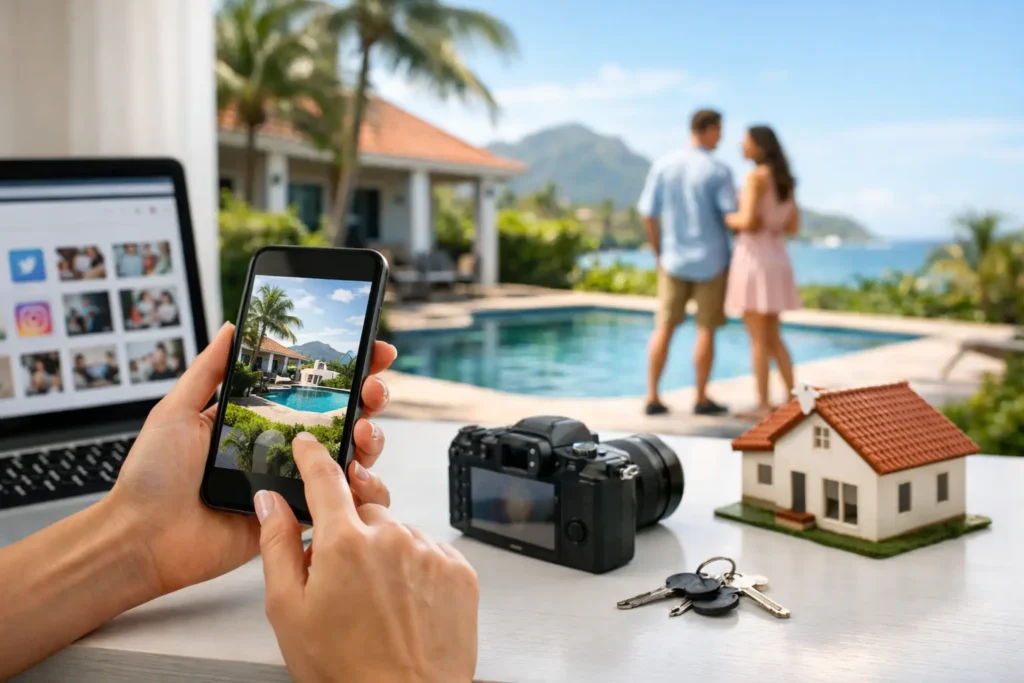
A listing can be priced correctly, professionally photographed, and located in a strong area – and still miss the right buyer if the marketing stops at the MLS. That is why social media marketing for home sellers Puerto Rico is no longer an extra. In many cases, it is the difference between local exposure and full-market exposure, especially when your likely buyer may be in San Juan, Orlando, New York, or relocating from elsewhere.
Puerto Rico real estate is visual, lifestyle-driven, and highly shareable when presented the right way. Buyers are not just comparing square footage. They are comparing views, neighborhood feel, commute time, outdoor space, access to schools, beach proximity, and whether a property looks move-in ready from the first few seconds on screen. Social media is where those first impressions are happening.
Why social media marketing for home sellers Puerto Rico matters
The Puerto Rico market has a wider buyer pool than many sellers realize. Some buyers are local families moving between municipalities. Others are off-island professionals, retirees, investors, military families, or Puerto Ricans planning a return to the island. Many of them begin their search casually, not with a direct inquiry, but by scrolling.
That matters because attention now starts before intent. A buyer may not wake up planning to schedule a showing in Dorado or Río Grande, but a strong video can create interest immediately. A well-produced reel of a gated home in Guaynabo or a condo with ocean views in Carolina can reach someone who was only loosely considering a move and turn them into an active prospect.
This is where old-school listing distribution has limits. Portals are necessary, but they often place your property beside dozens of similar options. Social platforms let a listing stand on its own. The format gives room to sell the feeling of the property, not just the facts.
What actually works on social media for Puerto Rico home sales
The strongest real estate social campaigns do not look like digital flyers. They look like buyer-focused media.
Short-form video performs especially well because it mirrors how buyers consume property content now. They want to understand flow, light, ceiling height, outdoor areas, and neighborhood context quickly. A polished walk-through with clean editing and smart sequencing can answer those questions faster than a photo gallery alone.
Drone footage is also more valuable in Puerto Rico than in many mainland markets. In areas like Luquillo, Humacao, Dorado, and Río Grande, location context sells. Buyers want to see proximity to the beach, resort areas, golf courses, marinas, highways, and surrounding terrain. Aerial visuals help them understand not just the house, but the setting.
Instagram and TikTok are strong for reach and engagement, but Facebook still matters, particularly for older buyers, family decision-makers, and community sharing. YouTube has a different role. It is often where longer-form property tours build trust with serious buyers who want more detail before requesting a showing. Each platform does a different job. Treating them the same usually weakens results.
Social media is not just about views
Sellers often ask how many views a post got. That is fair, but views alone are not the goal. The better question is whether the content attracted qualified attention.
A luxury listing in Dorado may need fewer, more targeted impressions than an entry-level home in Caguas. A condo in San Juan might benefit from heavier emphasis on convenience, walkability, and rental potential, while a suburban home in Carolina may perform better when content highlights family layout, parking, and yard space. Marketing should reflect the likely buyer, not just the property category.
This is where strategy matters. Good social media marketing creates three things at once: awareness, credibility, and urgency. Awareness gets the property seen. Credibility makes the listing feel represented by professionals. Urgency gives buyers a reason to act before someone else does.
The biggest mistakes home sellers make
The most common mistake is assuming any online exposure is good exposure. It depends.
Posting cellphone photos with weak lighting, crooked framing, or no narrative can make a good home feel average. Overposting without a plan can also hurt. If every post says the same thing, buyers tune out. On the other side, underposting can leave a listing invisible after the launch period.
Another mistake is marketing only the home and not the buyer outcome. People do not buy a kitchen because the countertop is quartz. They buy because they can picture hosting family there, managing busy mornings more easily, or stepping into a home that feels finished and low-stress. Features matter, but context sells.
Sellers also sometimes believe social media can replace pricing discipline. It cannot. Strong marketing increases exposure and improves presentation, but if the price misses the market, social media tends to amplify that problem rather than solve it. More visibility on an overpriced property often leads to more silence, not more offers.
How a strong campaign is built
Effective social media marketing for home sellers Puerto Rico starts before the first post goes live. The foundation is pricing, preparation, and positioning.
First, the home has to be market-ready. That may mean decluttering, minor cosmetic improvements, staging guidance, or timing the shoot around the best natural light. Once the property shows well in person, it can be translated properly to photo and video.
Then comes asset creation. Professional photography is the baseline. Video is the multiplier. Drone footage, vertical clips for reels, and a longer property walkthrough all serve different purposes. The goal is to build a package of content that can be deployed across platforms instead of relying on one post and hoping it performs.
The next step is messaging. Every home needs a clear angle. For one property, the story may be privacy and lot size. For another, it may be lock-and-leave convenience. For a relocation buyer, the strongest message may be neighborhood access, commute routes, and turnkey condition. Strong campaigns are built around a marketable story, not generic listing language.
What sellers in Puerto Rico should expect from their agent
If your agent says they use social media, ask what that actually means.
There is a real difference between occasionally posting listings and operating a consistent marketing engine. Sellers should expect platform-specific content, professional visuals, audience targeting, prompt follow-up on inquiries, and a plan for keeping momentum after launch. If a listing gets attention, the response process matters just as much as the creative.
This is especially true when off-island buyers are involved. They often need fast answers, extra video, local market context, and confidence that someone on the ground can manage details. Social media may generate the lead, but transaction skill is what converts interest into offers.
That is why the best results usually come from a brokerage that combines digital reach with operational control. A sharp reel can earn the click. Experienced pricing, negotiation, showing management, and execution are what protect the seller’s outcome.
Homes of Puerto Rico is built around that model – serious listing presentation paired with the kind of digital distribution that reaches beyond local traffic and into the feeds of motivated buyers.
Social media marketing for home sellers Puerto Rico by market
Not every municipality should be marketed the same way. San Juan buyers often respond to convenience, design, and urban lifestyle. Dorado content tends to perform best when it highlights exclusivity, amenities, and polished presentation. In Río Grande and Humacao, resort access and outdoor lifestyle can be major drivers. In Caguas or Guaynabo, family usability, school access, and practical living space may deserve more emphasis.
This is why local market knowledge still matters, even on global platforms. The content has to be current, but it also has to be accurate. A buyer who discovers your home through social media still needs reliable guidance about area differences, pricing realities, and what makes one neighborhood stronger than another.
The real advantage is demand generation
At its best, social media does more than advertise a listing. It creates demand where none existed a few minutes earlier.
That is powerful for sellers because buyers do not always search in a linear way. They may start with one municipality and expand to another. They may think they want a condo and realize they prefer a townhome after seeing a video. They may not know a neighborhood until strong content introduces it to them. Social media shortens the distance between discovery and action.
For home sellers, that wider discovery window can lead to more showings, stronger leverage, and better odds of reaching the buyer willing to pay for the right property. Not every listing needs the same intensity, and not every platform deserves the same effort. But in Puerto Rico, where lifestyle, visuals, and off-island demand play such a large role, social media is not just marketing polish. It is part of the sales strategy.
If you are preparing to sell, the question is not whether your home should be on social media. The question is whether it will be presented well enough to stop the scroll and strong enough to move a serious buyer from interest to action.